How Does AI Amplify Pentesting in Lorikeet Security?
Core stack and philosophy: a modern PTaaS portal with live findings, real-time chat, and integrated reporting; services spanning manual web/app/API/mobile/...
AI security audits don’t kill pentesting—they concentrate it where your stack actually bleeds
Hot take: If you believe Claude, Cursor, and Copilot make pentesters obsolete, you’ve never debugged a racey session invalidation bug at 2 a.m. AI-assisted code review is fantastic defensive plumbing—it drains the lowlands (XSS, SQLi, templating foot-guns, weak crypto) so the remaining water pools in the gnarly terrain: runtime, infrastructure, and configuration. That’s exactly where Lorikeet Security plants its flag. Their Flowtriq case study is the pattern I keep seeing in my own workflow: run an LLM-first audit to burn down code-level vulns, then bring in a manual, AI-native red team to pull the thread on what only exists in production.
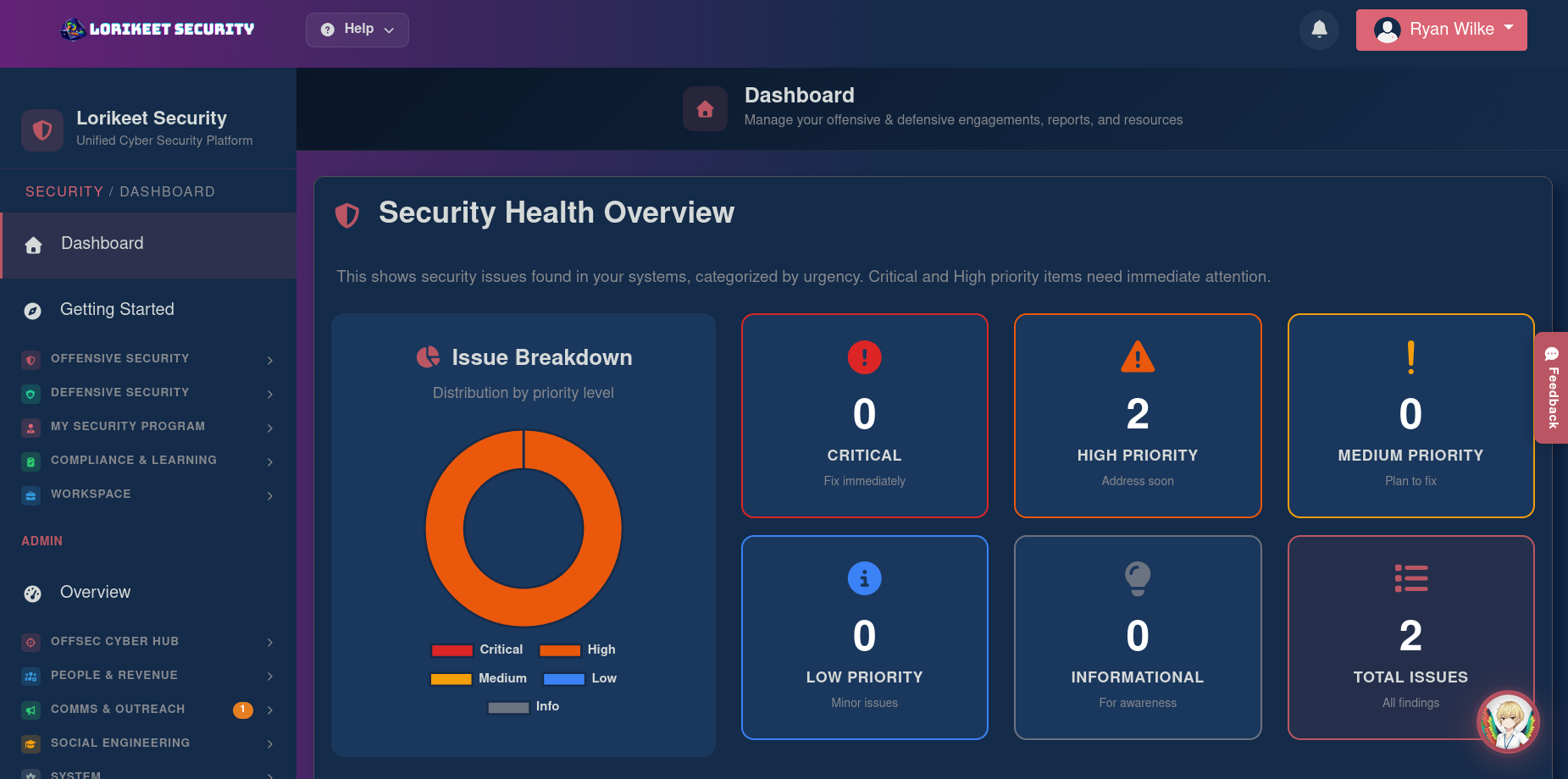
Core stack and philosophy: a modern PTaaS portal with live findings, real-time chat, and integrated reporting; services spanning manual web/app/API/mobile/cloud testing; continuous Attack Surface Management; plus vCISO and SOC-as-a-Service to close the loop. Architecture Breakdown: it’s designed for fast signal flow from human-led discovery to developer action.
Architecture & Design Principles
Lorikeet’s design is PTaaS-first: the portal isn’t a PDF factory, it’s the control plane. Findings stream in as events, not as quarterly artifacts. The case study cadence implies a few principles:
- 🌿Human-in-the-loop core: manual testers drive discovery, but packaging is automated—classification, evidence capture, and compliance mapping happen in near-real time.
- 🌿Runtime-first scoping: assets are enumerated as deployed systems (apps, APIs, proxies, TLS endpoints, storage and file systems), not just repos. That’s how you surface reverse-proxy header quirks or TLS posture drift AI can’t “read” from code.
- 🌿Feedback immediacy: real-time chat and live issues shorten the delta between exploit and remediation PR. In my own teams, that’s the difference between a one-day MTTR and a multi-week saga.
- 🌿Compliance overlays: results tagged against SOC 2, HIPAA, PCI-DSS, HITRUST, FedRAMP controls so security and GRC don’t fight over translation.
Scalability is baked into the operating model more than raw compute: breadth via Attack Surface Management to maintain an up-to-date target graph; depth via scheduled or on-demand manual runs; governance via consistent evidence objects that roll up into reports without the spreadsheet rodeo.
Feature Breakdown
Core Capabilities
- 🌿
Manual pentesting across web, API, mobile, cloud Technical: emphasis on session management edge cases, protocol surface (TLS ciphers/HSTS), and infra seams (reverse proxies, file-system hygiene). Use case: Flowtriq’s AI pass cleaned code-level vulns; Lorikeet still landed five extras (two High, one Medium, two Low) in places AI could not see without executing the system.
- 🌿
Attack Surface Management (ASM) Technical: continuous asset inventory and exposure tracking to catch drift—new subdomains, proxy rules, TLS changes, orphaned endpoints. Use case: “We rotated the proxy container and lost HSTS preload” is a real sentence I’ve had to say. ASM finds that Tuesday regression.
- 🌿
PTaaS portal with live findings, chat, and integrated reporting Technical: evented issue lifecycle, evidence attachments (screens, PCAPs, headers), and compliance mapping. Use case: Developer pings tester in-chat, validates a SameSite=None cookie regression with a canary build, closes the loop before the next sprint.
Integration Ecosystem
Expect APIs and webhooks for CI/CD and ticketing. In practice, teams wire findings into Jira for backlog flow, Slack for alerts, and SIEMs for correlation with SOC telemetry. Cloud and proxy configs often ride through GitOps; a sane PTaaS drops JSON/CSV exports to keep everything in version control. SSO via your IdP matters when legal and GRC need read-only access without new accounts. The value is not yet another dashboard—it’s how fast findings become reproducible issues in your system of record.
Security & Compliance
Lorikeet operates in regulated spaces (SOC 2, HIPAA, PCI-DSS, HITRUST, FedRAMP), so the deliverables are shaped to map findings to control statements and audit evidence. Data handling is aligned to enterprise expectations: least-privilege project scoping, role-based access, and auditable change tracking. The important part: reports aren’t just “CWE bingo”—they’re framed so auditors and engineers can both sign off without a translation layer.
Performance Considerations
Speed here is “time to validated exploit” and “time to merged fix.” Real-time chat plus live issues trims the back-and-forth. Reliability is procedural: retesting and versioned evidence prevent “works on my machine” arguments. Resource usage is human, not CPU—Lorikeet’s edge is focusing tester hours where AI scans are structurally blind (e.g., header normalization across proxies, TLS downgrade behaviors, filesystem temp paths).
How It Compares Technically
- 🌿Versus AI code scanners (CodeQL, GitHub Advanced Security, Snyk): those excel at static/code-level defects. Lorikeet complements them by testing execution paths mediated by proxies, TLS termination, cookies, and infra policy—not visible from ASTs.
- 🌿Versus DAST/IAST (OWASP ZAP, Burp Suite automation): automation flags classes; Lorikeet chains quirks into end-to-end exploits (e.g., X-Forwarded-Proto spoofing leading to cookie mis-scoping).
- 🌿Versus PTaaS incumbents (Cobalt, Synack, Bugcrowd, Bishop Fox Cosmos): similar delivery model, but Lorikeet’s positioning is explicitly “post-AI-audit” with methodology aimed at runtime/infrastructure. If your codebase is already LLM-scrubbed (Claude, Cursor, Copilot in review), this focus matters.
- 🌿Versus automated attack platforms (Pentera): good for control validation breadth; Lorikeet is for bespoke depth where nuance matters.
Developer Experience
From a developer’s seat, the DX win is conversational triage plus actionable artifacts. I want:
- 🌿Repro steps with concrete header sets, cURL one-liners, and environment notes
- 🌿Clear impact and exploit chain narrative
- 🌿Retest hooks I can trigger after a hotfix That’s consistent with a live PTaaS model. The case study cadence shows reduced “security theater” and more “mergeable PRs.”
Technical Verdict
Strengths:
- 🌿Targets residual risk after AI code review—session edges, TLS posture, filesystem hygiene, reverse-proxy headers
- 🌿Live, evented PTaaS workflow that shortens MTTR
- 🌿Compliance-aligned outputs without dumbing down technical detail
Limitations:
- 🌿Depth depends on tester time; breadth relies on solid ASM hygiene
- 🌿Not a replacement for SAST/DAST/CI guardrails—assumes you already run them
Ideal use:
- 🌿AI-native orgs that already run LLM-driven audits and need runtime/infrastructure validation
- 🌿Regulated SaaS, healthcare, fintech, and public sector teams aligning to SOC 2, HIPAA, PCI-DSS, HITRUST, or FedRAMP
If you want the receipts, read the Flowtriq case study on lorikeetsecurity.com/blog/flowtriq-case-study-ai-audit-pentest-gap. My workflow: let the LLMs vacuum the floor; then let Lorikeet find the cracks in the foundation.
Explore Lorikeet Security Case Study
Visit the Source🌻